Complete Guide : How to choose your Baseball Glove?
The baseball glove is much more than a simple accessory: it's the player's most personal piece of equipment. Unlike many sports where equipment can be standardised, in baseball each glove is chosen according to your position in the field of your morphology of your level and your budget. A good glove is like an extension of your hand. The wrong choice, on the other hand, can hamper your performance and lead to avoidable mistakes.
In this comprehensive guide, we'll help you to understand the differences between the different types of glove, the materials available, sizes according to age and position, and advice on how to look after your glove over the long term. Whether you're a beginner, a parent looking for equipment for your child, or an experienced player looking to upgrade, you'll find all the answers here.
The Different Types of Baseball Gloves According to Position
The first golden rule of baseball :your position determines your glove. There is no such thing as a universal glove. Every job in the field has its own specific requirements, and manufacturers have designed models adapted to each of these realities.
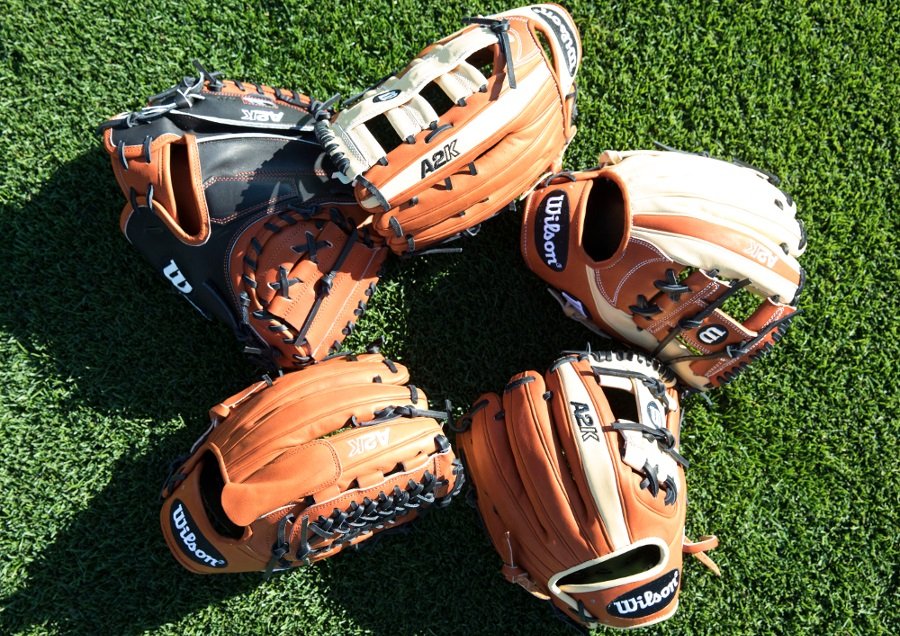
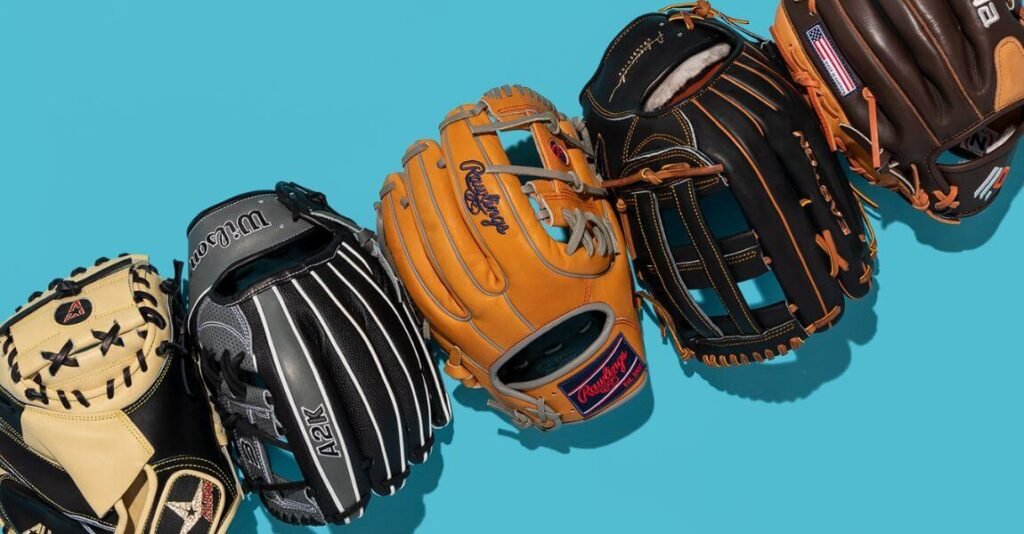
Here are the main families of gloves on the market:
- Gloves Infield(infield players)
- Gloves Outfield(outfielders)
- Mittens from Catcher(receiver)
- Gloves Premier Base
- Gloves Launcher
- Gloves Children
Each of these categories responds to specific game constraints. Let's look at them in detail.
Infield vs Outfield gloves: What's the difference?
This is the question most frequently asked by beginners. And with good reason: at first glance, the two types of glove look the same, but their characteristics are actually very different.
The Infield Glove: Speed above all else
Infielders - shortstops, second basemen and third basemen - have an absolute must:catch and release the ball as quickly as possible. Every fraction of a second counts to make a double play or put a runner out of play.
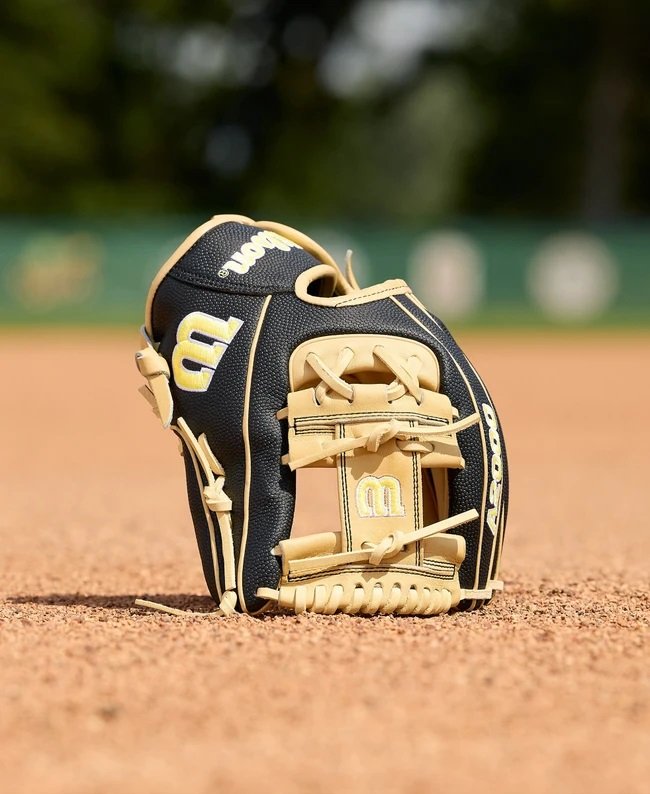
A infield baseball glove can be identified by its characteristics:
- Reduced size between 11 and 11.75 inches in general
- Shallow pocket The ball can be extracted quickly in a single movement
- Open pocket fabric(type I or H): facilitates the hand-glove transition during relaunches
- Shorter fingers the glove is more compact and easier to handle
- Closed form: promotes rapid closure on the ball
If you play in the infield, a glove that's too big or has too deep a pocket will cost you precious half a second on every defensive play.
The Outfield Glove: Coverage and depth
The outfielders (left, centre and right) have a completely different role:cover as much ground as possible and catch high balls, often while running or diving. The priority is not the speed of the release, but the securing the ball.
A outfield baseball glove is distinguished by :
- Larger size between 12 and 13 inches (12.75 inches being very common)
- Deep pocket The ball sinks and stays firmly in place, even when diving.
- Longer fingers increases the reception area
- H pocket fabric: reinforces pocket depth
- More open shape: encourages the reception of high balls
To sum up: if you play infield, choose a small, responsive glove. If you play outfield, opt for a large, secure glove.
| Criteria | Infield | Outfield |
|---|---|---|
| Size | 11" - 11,75" | 12" - 13" |
| Pocket depth | Shallow | Deep |
| Extraction speed | Priority | Secondary |
| Ground cover | Secondary | Priority |
| Finger length | Short | Long |
The Catcher's Glove: A Category of its Own
The catcher is a unique position that requires radically different equipment. The term 'glove' is no longer used.mitten This is because the fingers are all connected and not individualised - with the exception of the thumb.
A catcher's mitt is designed for :
- Cashing in on hundreds of throws per game at very high speeds (sometimes in excess of 150 km/h)
- Protect the palm and fingers with plenty of padding
- Offer a visible target for the launcher thanks to its large surface area
- Making it easier to get out of the game on low balls or attempted base steals
Technical characteristics of a catcher's mitt :
- Size between 32.5 and 34.5 inches (different from conventional gloves)
- Thick padding: necessary to absorb repeated shocks
- Special closure often a one-handed system for rapid opening
- Enhanced durability the materials are more resistant because the job is physically very demanding
If you're a catcher, never try to use a standard glove: you risk not only injuring yourself, but also being less effective at blocking and throwing to the bases.
The Premier Base glove: Originality and versatility
The 1st baseman occupies a position that also warrants a special glove. He must receive all kinds of reminders of his team-mates - sometimes ill-fitting, low to the ground or too high - while keeping one foot on the base.
Le first base baseball glove is distinguished by :
- A rounded shape without separate fingers (similar to the mitten, but more flexible)
- A longer side edge: helps to catch low balls or poor follow-throughs
- A size between 12 and 13 inches
- Moderate padding enough to handle powerful relaunches, without being as thick as a catcher's mitt
This glove is visually original but should not be confused with an outfield glove. Its specific shape allows it to scrape the ground more easily and stretch the lines of defence.
The Throwing Glove: Discretion and Symmetry
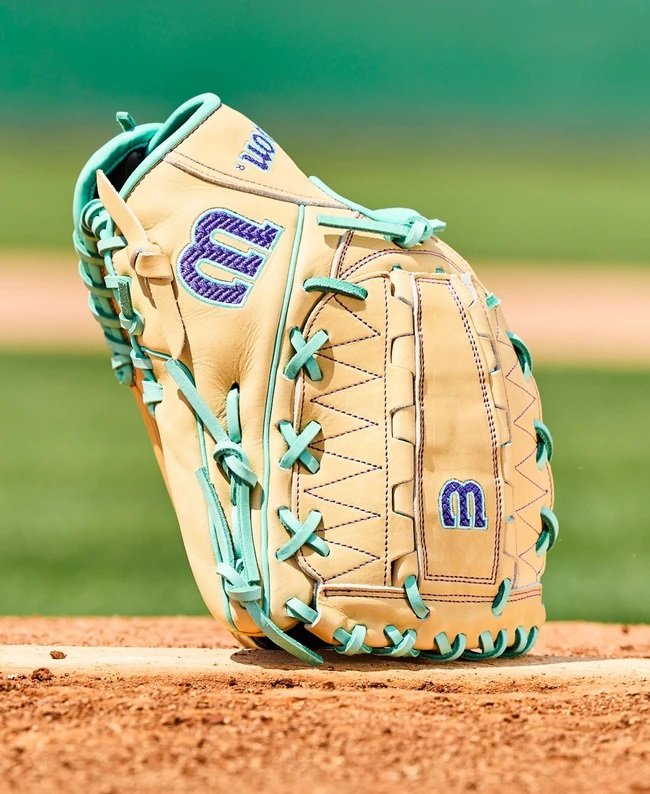
The pitcher has a constraint that the other players do not have:hide your grip from the opposing batsman. The shape of the hand in the glove often reveals the type of pitch being prepared - curve, fastball, changeup - and the best batters try to read this information even before the ball is released.
Le pitcher's baseball glove meets this need with :
- Fully enclosed pocket fabric(no opening between the fingers): prevents opponents from seeing the grip
- An intermediate size between 11.5 and 12 inches
- A discreet design: often solid colours, without distracting motifs
- Good rigidity to maintain the hand position during the throwing phase
Please note: the official MLB rules specify that the pitcher's glove must not be white or grey so as not to be visually confused with the ball.
Baseball Gloves for Children
Introducing a child to baseball also requires equipment that is perfectly adapted to the child's body shape. A glove that's too big will be uncomfortable, difficult to close and likely to discourage the child quickly.
The children's baseball gloves are designed with :
- Smaller sizes from 9 inches (very young children) to 11 inches (pre-teens)
- More flexible materials synthetic leather or mesh to make it easier to get to grips with right from the start
- Less weight to prevent little hands from getting tired over time
- Attractive colours motivating and engaging young players
| Age | Recommended size |
|---|---|
| 3 - 5 years | 9 inches |
| 6 - 8 years | 10 inches |
| 9 - 12 years | 10.5 - 11 inches |
| 13 - 15 years | 11 - 11.5 inches |
A word of advice: for children, there's no need to invest in a full-grain leather glove. A good-quality synthetic glove will suffice, and will make break-in easier from the very first time.
Materials: Leather, Synthetic or Mesh?
The choice of material is just as important as the type of glove. It has a direct influence on durability, comfort, weight and, of course, the final price.
Full-Grain Leather
This is the reference material for experienced players and professionals. The full-grain leather offers :
- A exceptional durability A good leather glove can last 10 to 15 years with regular maintenance.
- A progressive break-in the glove adapts to your hand as you play and train
- A perfect fit once the leather has been broken and softened
- A premium feel popular with demanding gamers
Disadvantage: it is heavier, more rigid to buy and more expensive. Break-in can take several weeks.
Tanned Leather (Steerhide / Cowhide)
More affordable than full-grain, cowhide or bullhide is widely used in the mid-range ranges. It offers a good balance between durability and flexibility with a faster break-in. Ideal for semi-confirmed players or budding competitors.
Synthetic Leather
Synthetic leather gloves are designed for people who beginners and children. They are :
- Cheaper to buy
- Lighter and easier to handle
- Ready to use out of the box (little or no break-in required)
- Less durable over time than natural leather
Perfect for beginners or occasional training.
Mesh (Synthetic mesh)
Some gloves incorporate mesh panels, particularly on the back of the hand. This considerably reduces the weight of the glove and improves ventilation in summer. This is a popular option for outfield use, where lightness is a real advantage, but less recommended for catchers or first basemen, where impacts are more frequent and intense.
Sizing Guide: How do I measure my Baseball Glove?
The size of a baseball glove is measured in inches From the tip of the middle finger to the bottom of the palm. It varies according to the position and age of the player.
Size Chart by Position (Adult)
| Position | Recommended size |
|---|---|
| Infield (SS, 2B, 3B) | 11" - 11,75" |
| First Base (1B) | 12" - 13" |
| Outfield | 12" - 13" |
| Catcher | 32.5" - 34.5" (specific measurement) |
| Launcher | 11,5" - 12" |
How to choose according to your morphology?
In addition to its position, the size of your hand is also a factor. For more information:
- Measure the distance in centimetres between the bottom of your palm and the tip of your middle finger
- Less than 17 cm → glove 11 to 11.5 inches
- Between 17 and 19 cm → glove 11.5 to 12 inches
- Over 19 cm → glove 12 to 13 inches
How to Break-In Your Baseball Glove
A new leather glove, even a good quality one, is often stiff and difficult to close when you buy it. It needs to be "break" to soften it and gradually shape it to your hand. Here are the tried and tested methods:
Classic method (most recommended) :
- Apply break-in oil or glove grease all over the leather.
- Place a ball in the glove pocket
- Close the glove and tie it with elastic or string.
- Leave to rest overnight
- Repeat the operation several times over a week
Accelerated method :
- Some specialist shops offer steam machines that soften leather in just a few minutes.
- Practical for saving time, but use sparingly as excessive heat can weaken the seams
Field method (the most natural) :
- Simply play! Repetition of fielding exercises is the best way to break a glove naturally.
- Allow between 2 and 6 weeks depending on the hardness and thickness of the leather.
Care and Maintenance: Making your glove last
A quality baseball glove is a real investment. With regular care, it can last you for many seasons.
Best practice :
- Clean regularly your glove with a slightly damp cloth to remove accumulated dirt and perspiration
- Apply glove oil(condition the leather) 2 to 3 times a season to prevent cracking and maintain suppleness
- Store flat with a bullet in your pocket, never in a sealed bag
- Avoid excessive humidity If your glove gets wet after a match in the rain, leave it to dry in the open air, away from any source of direct heat (radiator, intense sun).
- Never put it in the oven This technique, which is often quoted on the Internet, irreparably damages the stitching and the leather.
Discover all our care and maintenance for baseball gloves to keep your equipment in top condition season after season.
Summary: Which glove should you choose according to your profile?
| Profile | Type of glove | Recommended material | Direct link |
|---|---|---|---|
| Beginner infield player | Infield 11" | Synthetic leather | Infield gloves |
| Confirmed infield player | Infield 11.5" | Full-grain leather | Infield gloves |
| Voltigeur | Outfield 12.75 | Tanned leather / full-grain | Outfield gloves |
| Receiver | 33" catcher mitt | Reinforced leather | Catcher mittens |
| First base | 1B 12.5" glove | Tanned leather | 1st base gloves |
| Launcher | Pitcher 11.75" | Full-grain leather | Throwing gloves |
| Children aged 6-10 | 10" multi-purpose | Lightweight synthetic | Children's gloves |
Conclusion
Choosing a baseball glove is no easy task. Between the types of glove depending on position, materials, sizes and the specifics of each position, there are many parameters to take into account. But once you've found the glove that's right for you You'll immediately understand why baseball players are so attached to their equipment - some keeping the same glove for their entire career.
Don't hesitate to consult our complete selection of baseball gloves on Sportland American You'll find models to suit every level, every position and every budget. And don't forget to bring your suitable cleaning products to extend the life of your investment.
🇬🇧 Version : English | 🇫🇷 Version française