The rules of American football: finally understanding this spectacular sport
American football is a fascinating, strategic, explosive and sometimes complex sport for new spectators to understand. Between offensive systems, penalties, strategies and defensive stops, it can be difficult to grasp all the subtleties. In this article, you'll discover the essentials, the official rules, players' roles, phases of the game and explanatory illustrations to simplify understanding.
Objective: to master the rules sufficiently to follow an NFL game without getting lost.
1. The site and its key areas
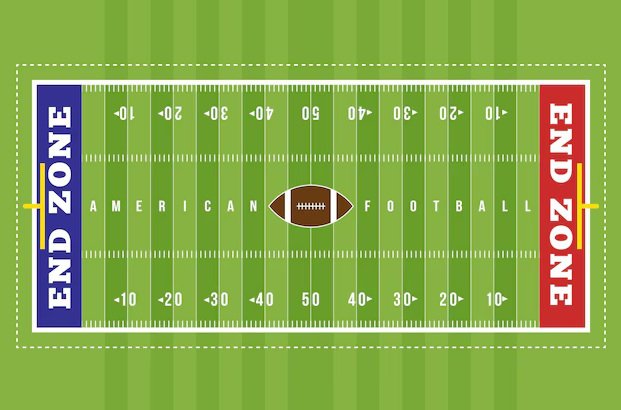
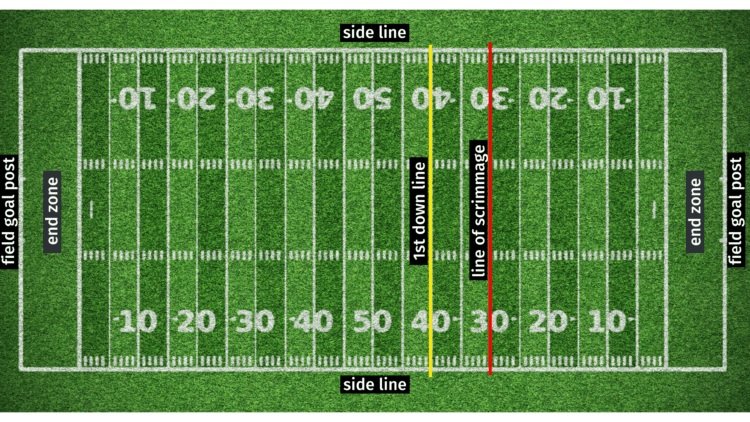
The pitch is 120 yards long (110 metres) and 53 yards wide (48.8 metres). It is divided into several key areas:
- The end zones Touchdown zones at each end.
- The sidelines Lateral lines.
- The hash marks Markers where the ball is placed according to the previous action.
- La SCRIMMING LINE The starting point for each action.
2. The aim of the game
Two teams compete to score more points by advancing the ball into the opponent's zone.
How to score :
- Touchdown (6 points) Carrying or receiving the ball in the opponent's end zone.
- Transformation (1 or 2 points) extra point or 2-point conversion.
- Field Goal (3 points) kick passing between the posts.
- Safety (2 points) Tackle an opponent in their own end zone.
3. Teams and player roles
A team consists of three distinct units :
A - Offence
Goal: move forward and score.
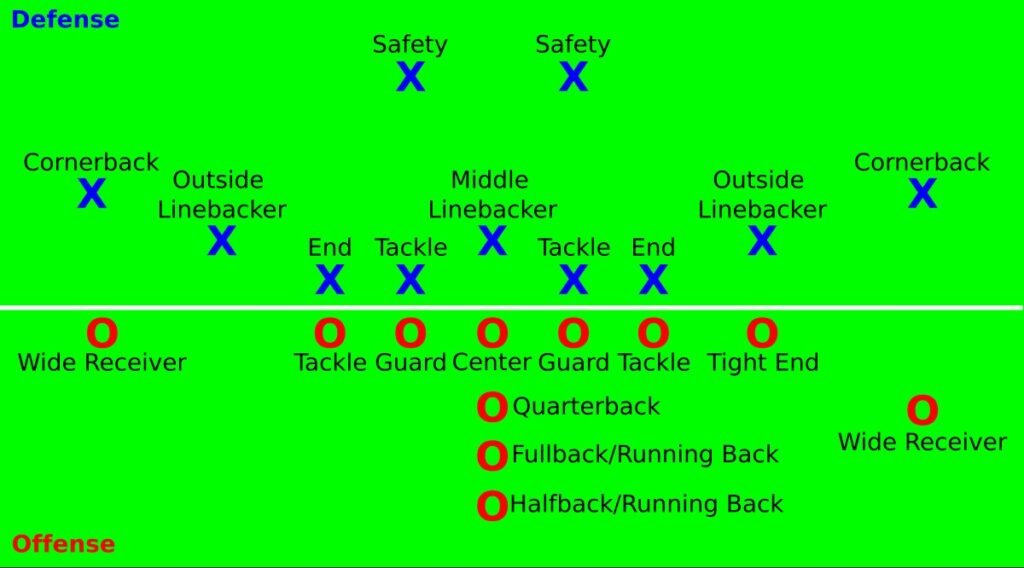
- Quarterback (QB) The team's mastermind, throws or hands over the ball.
- Running back (RB) shopping.
- Wide receivers (WR) fast receivers.
- Tight end (TE) hybrid blocker/receiver.
- Offensive line (OL) protection and breaches.
Suggested illustration:
Offensive line-up with QB, WR, RB, TE and OL in position.
B - Defence
Goal: prevent the opposition from advancing.
- Defensive line (DL) pressure and stop run.
- Linebackers (LB) Intermediate cover.
- Cornerbacks (CB) marking of receivers.
- Safeties (S) last line.
C - Special Teams
Field goals, punts, kickoffs and returns.
4. The phases of the game: understanding the "downs
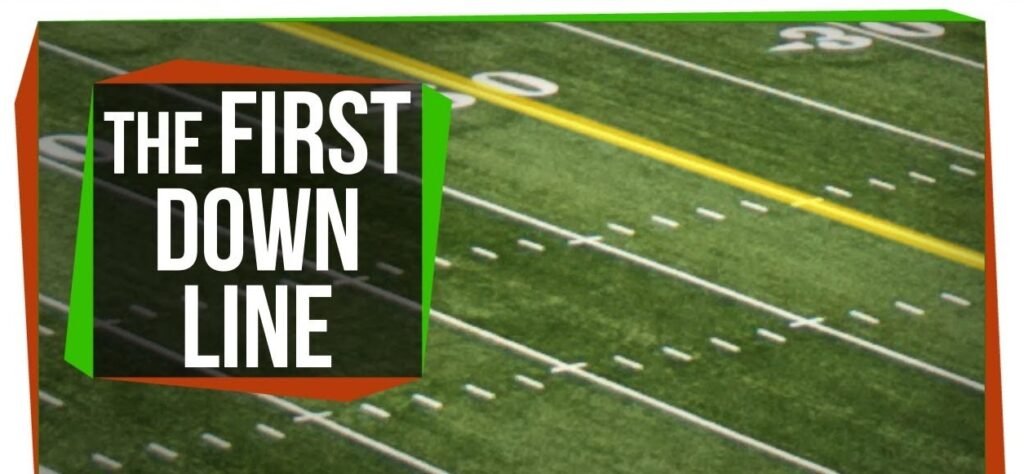
The attack has 4 attempts (downs) to move forward at least 10 yards.
- If she succeeds → she recovers a new series of 4 downs.
- If it fails → the team usually kicks on the 4th down (punt).
5. The main offensive actions
A - The passing game
The QB throws to a receiver.
A pass is completed if the player has control of the ball and keeps both feet on the ground.
B - The racing game
The QB hands the ball to the RB.
Objective: to gain yards quickly.
C - Play-action
The QB fakes a run before throwing: deceives the defence.
D - The quarterback sneak
Short action where the QB rushes forward himself.
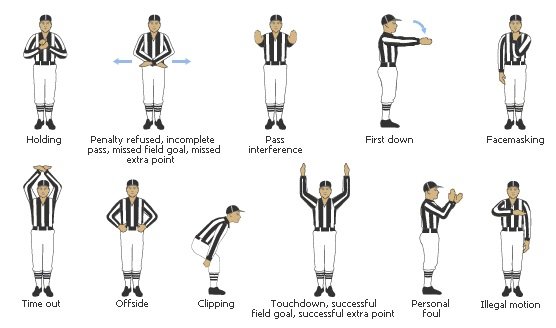
6. The main penalties (and their consequences)
Some of the most common:
- Offside / False Start (5 yards)
- Offensive holding (10 yards)
- Pass Interference (spot foul, often huge gain)
- Roughing the passer (15 yards + automatic first down)
- Face Mask (15 yards)
7. The length of an NFL game
A match consists of :
- 4 quarters of 15 minutes each
- A 12-minute half-time
- Frequent stops of the stopwatch
Actual duration :Approx. 3 hours.
8. Strategies: the essence of American football
Attack:
- Spread offence
- West Coast offence
- RPO (Run Pass Option)
- No-huddle offence
Defence :
- Cover 2
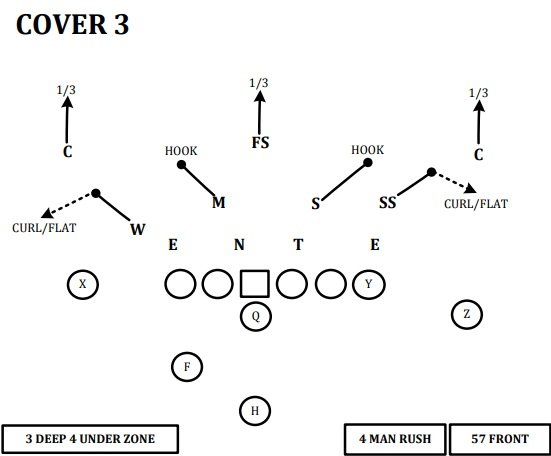
- Cover 3
- Blitz
- Nickel / Dime packages
9. VAR in American football: the challenge
Each coach has two challenges per match.
If he wins → he keeps his challenge.
If he loses → he loses one and the team a time-out.
Some actions remain undeniable such as penalties.
10. How do you follow a match when you're just starting out?
- First observe the quarterback He sets the direction of play.
- Watch the forward line to anticipate a run or pass.
- Locate the position of the safeties to guess the defensive cover.
- Read the "1st & 10 / 2nd & 4 / 3rd & 12" screen to understand the situation.
11. Where can I buy official NFL products?
To accompany your discovery of American football, you can find all official NFL merchandise such that :
Everything is available on :
👉www.sportlandamerican.com
🇬🇧 Version : English | 🇫🇷 Version française